New York Machinery
Accident Lawyers

If you were injured by construction machinery in New York City, a machinery accident lawyer in NYC can help you understand your rights and pursue the full compensation you deserve. At Gorayeb & Associates (The People’s Lawyers), our construction accident attorneys have spent more than 40 years fighting for injured workers across New York’s five boroughs, recovering more than $2 billion for our clients.

When a forklift tips over, an excavator swings without warning, or a power saw operates without its guard, the consequences can be catastrophic — and someone is legally responsible.

This page covers the machinery types that cause the most serious injuries in New York, the OSHA standards that govern construction equipment safety, who bears legal responsibility when those standards are violated, and what injured workers can do to protect their rights.

Accidentes en demoliciones: derechos laborales en NY

Why Construction Machinery Accidents Are So Dangerous in New York City

New York City operates one of the most active construction markets in the world. At any given time, thousands of job sites are active across Manhattan, Brooklyn, Queens, the Bronx, and Staten Island, from high-rise residential towers to underground utility work, bridge repairs, and highway expansion projects. That concentration of heavy equipment operations in confined urban environments creates dangers that simply do not exist on suburban or rural sites.

OSHA’s Fatal Four, the four hazard categories responsible for the most construction deaths nationally, include two directly tied to machinery: struck-by accidents, where workers are hit by moving equipment or falling loads, and caught-in/between accidents, where workers are caught, crushed, or pinched between machinery and another object. Together, these two categories account for roughly 40 percent of all construction fatalities in the United States, according to Bureau of Labor Statistics data.

New York State construction fatality rates have historically exceeded the national construction industry average. OSHA’s New York-area offices rank among the most active in the country for construction enforcement, generating a documentary record that skilled machinery accident attorneys use when building negligence claims.

The urban legal context also matters. NYC construction sites are governed by the New York City Building Code, Department of Buildings regulations, and New York State Labor Law in addition to federal OSHA standards. That layered regulatory environment creates accountability for property owners, general contractors, and subcontractors that is broader and more worker-protective than in most other jurisdictions, which is why New York construction accident claims often yield substantially larger recoveries than equivalent cases filed elsewhere.

Types of Construction Machinery That Cause the Most Injuries

Not all heavy equipment presents the same risks. Each type of machinery creates specific hazard profiles that determine the nature of injuries, who is responsible, and which legal theories apply.

Accidentes de montacargas en construcción en Nueva York

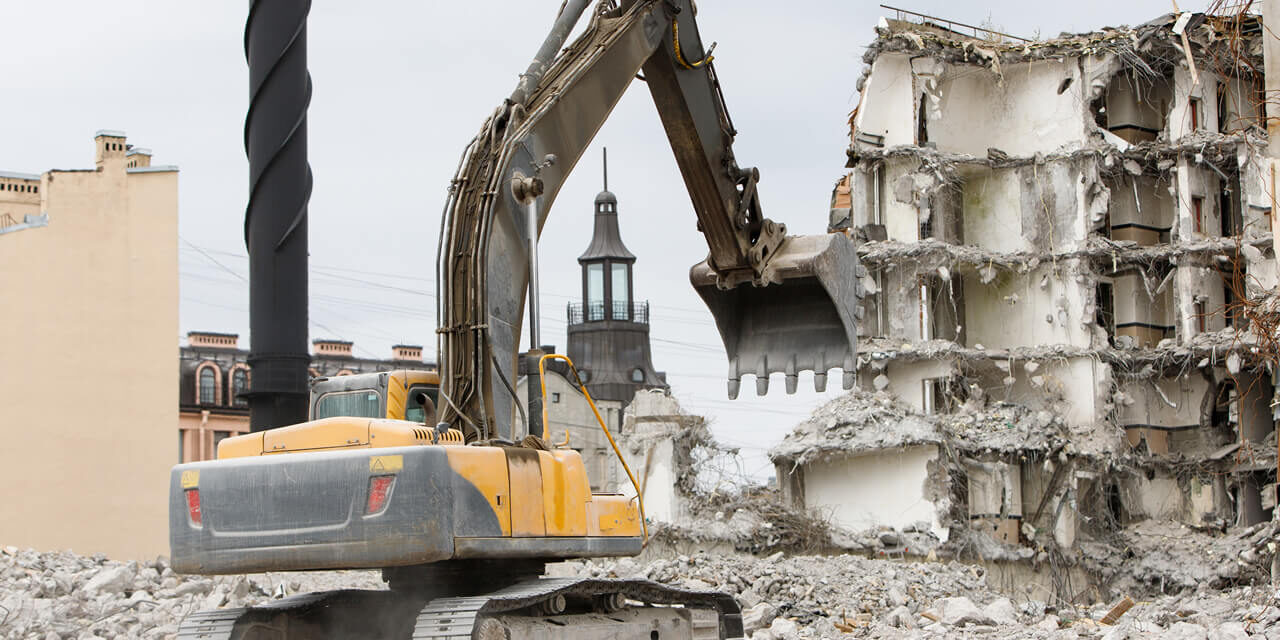
Excavators and backhoes are among the most dangerous machines on any construction site because of their swing radius. The rotating upper structure of an excavator can sweep workers standing within its arc in an instant, a hazard that requires spotters, clearly marked exclusion zones, and competent operator training under OSHA 29 CFR 1926.600. Trench excavation adds a second danger category: cave-ins and collapses, governed by OSHA 29 CFR 1926.651 and 29 CFR 1926.652. When an excavation collapse injures a worker, the excavator operator, the excavation subcontractor, and the general contractor may all face liability. Our excavation site accident lawyers handle both equipment hazard and trench condition cases.

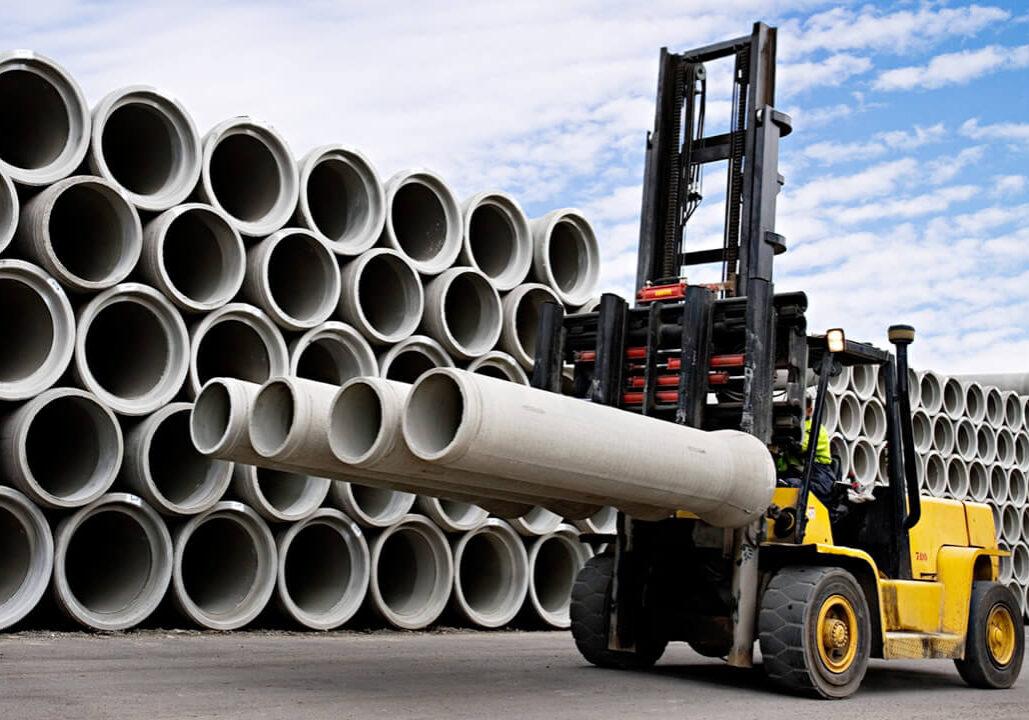
Forklifts are involved in approximately 85 fatal work injuries and nearly 35,000 serious injuries in the United States every year, according to OSHA data.

In New York City, forklifts operate not only on construction sites but also in warehouses, loading docks, manufacturing facilities, and commercial interiors, making this one of the broadest categories of heavy equipment-related injuries in the city. The three most frequent forklift accident patterns are tip-overs (caused by overloading, adverse surface conditions, or high-speed turns), pedestrian strikes (workers in the travel path of a moving machine), and falling loads (improperly secured materials that drop from raised forks).

OSHA’s powered industrial truck standard, 29 CFR 1910.178, requires operator certification, pre-shift inspections, and strict adherence to load capacity compliance. When employers skip these requirements (often under production pressure), the legal consequences are significant.

If you were hurt in a forklift accident, our dedicated forklift accident lawyers page provides detailed information about your specific rights and available claims.

Rotating drum mixers create entanglement hazards that rank among the most severe in construction work. A worker drawn into the rotating components of a mixer can sustain crushing, degloving, and amputation injuries within seconds. Mixer chutes and discharge systems also expose workers to caustic concrete that causes serious chemical burns to skin and eyes.

Machine guarding standards under 29 CFR 1926 Subpart O require that rotating parts be shielded to prevent contact during operation, and failure to maintain those guards is a recurring cause of entanglement injuries on New York job sites.

Circular saws, reciprocating saws, angle grinders, and table saws cause thousands of construction injuries annually, amputations, severe lacerations, and kickback injuries that occur when guards are absent, blade brakes are disabled, or workers lack training in managing kickback forces. OSHA’s machine guarding standard requires guards on all saw blades in operation, but guards are routinely removed in the field for convenience, creating direct employer liability. Our power saw injury lawyers have handled numerous such cases across New York.

Crane accidents (load drops, boom strikes, crane collapses) are the highest-consequence machinery events on any construction site. In a dense urban environment like New York City, a crane failure can injure or kill multiple workers and street-level bystanders simultaneously. New York has dedicated crane safety regulations under NYC Building Code Title 28, Chapter 33, in addition to federal OSHA standards. Our crane accident lawyers have extensive experience with these cases. Objects falling from crane loads create a distinct injury category that our falling object accident lawyers have successfully pursued under New York Labor Law § 240.

Road rollers, plate compactors, and soil compactors are low-speed but extremely high-mass machines. A worker who falls in the path of a compactor has virtually no chance of avoiding catastrophic injury. Operator visibility in compactor cabs is severely limited, making spotter requirements and exclusion zones critical safety controls. When contractors skip these controls to reduce labor costs, liability attaches to the contractor and, in most cases, to the general contractor overseeing the site.

Hydraulic systems power lifts, presses, demolition tools, and heavy equipment attachments throughout construction sites. Burst-line failures present two distinct hazards: high-pressure fluid release, causing severe burns and lacerations, and high-pressure injection injuries, where hydraulic fluid penetrates the skin under thousands of pounds per square inch and destroys internal tissue in a manner that may not be visually apparent but requires immediate surgical intervention.

Equipment manufacturers have a duty to design hydraulic systems with appropriate pressure relief and line protection; when they fail that duty, product liability claims become available.

What Causes Machinery Accidents on NYC Construction Sites?

Understanding what causes a machinery accident is essential to identifying who bears legal responsibility. In our experience, the following causes appear most often — and each connects to a specific party’s legal duty.

Missing or Inadequate Machine Guarding

OSHA’s 29 CFR 1926 Subpart O requires guards on all machinery parts where workers may contact rotating, moving, or reciprocating components during operation. When guards are absent, removed, or inadequate, the standard is violated. Employers who fail to maintain guarding and manufacturers who sell equipment without required guards bear responsibility for resulting injuries.

Lockout/Tagout Failures

29 CFR 1910.147, the control of hazardous energy standard, requires that machinery be fully de-energized and physically locked out before any maintenance, cleaning, or repair work is performed. Violations of this standard are consistently among OSHA’s most-cited violations across construction and manufacturing. When a worker is injured because a machine was energized during servicing, a lockout/tagout failure is often the central theory of liability.

Operator Error and Insufficient Training

OSHA requires that machinery operators demonstrate competency for the specific equipment they operate. Improperly trained operators are more likely to misjudge swing radii, exceed load limits, operate on inappropriate surfaces, or miss early mechanical failure signs. When employers assign workers to heavy equipment without adequate training, they create direct legal exposure for resulting injuries.

Mechanical Failure from Deferred Maintenance

Construction equipment that is not regularly inspected and maintained will eventually fail. Brake failures, hydraulic line ruptures, steering failures, and structural collapses frequently trace back to maintenance schedules ignored under production pressure. General contractors and equipment owners have a duty to ensure that all equipment operating on their sites is in safe working order.

Inadequate Communication and Lack of Spotters

Large equipment in confined urban sites creates blind spots that no operator can fully overcome. OSHA requires spotters and signal systems when operator visibility is limited. When contractors skip spotter requirements to reduce labor costs, the predictable result is a struck-by accident that was entirely preventable.

Fatigue and Overwork

Construction is among the most fatigue-prone industries. Long shifts, overnight work, and schedule pressure create conditions where judgment lapses become far more likely. While fatigue is difficult to plead as a standalone legal theory, it frequently connects to employer decisions about scheduling, rest enforcement, and a production-over-safety culture.

Equipment Used Beyond Design Limits

Every piece of heavy equipment carries rated capacities and defined permitted uses. Forklifts operated above their rated load capacity, cranes used at angles exceeding manufacturer specifications, and scaffolding repurposed as a lifting platform all exceed design limits and create predictable failure modes. When equipment is used outside its intended parameters, both the employer and the equipment owner may be liable for the resulting injury.

OSHA Machine Guarding Standards and How Violations Lead to Claims

When a machinery accident occurs on a New York construction site, one of the first steps a skilled attorney takes is identifying OSHA violations. Not because an OSHA citation creates automatic liability (it does not), but because a citation documents precisely what the employer or site controller failed to do. That documentation is powerful evidence in civil litigation.

The primary OSHA standards governing construction machinery are:

evidencia necesaria tras accidente de construcción en Nueva York

29 CFR 1926 Subpart O — Machinery and Machine Guarding

This subpart establishes guarding requirements for construction machinery, covering rotating parts, concrete and masonry equipment, and general guarding principles. Guards must prevent contact with dangerous components during operation and must be continuously maintained. The full standard is available from OSHA’s machine guarding regulations.

29 CFR 1926.600 — Equipment Requirements

This standard requires that all construction-site equipment be maintained in safe operating condition, establishing requirements for brakes, lighting, cab protection, and rollover protection structures on applicable machines.

29 CFR 1926.602 — Material Handling Equipment

This standard governs forklifts, earthmovers, and other material handling equipment used in construction, setting requirements for operator competency, equipment maintenance, and operational safety measures.

29 CFR 1910.147 — Lockout/Tagout

Although housed in the general industry standards, lockout/tagout requirements apply to construction work involving machinery servicing and maintenance. Workers can learn more about their rights under this and related standards through OSHA’s worker rights and protections page.

How OSHA Violations Strengthen a Civil Claim

When OSHA investigates a construction accident and issues citations, the resulting inspection reports and citation records can be introduced in civil litigation as evidence that a specific safety standard was violated. Under New York law, a violation of a specific safety statute or regulation can constitute negligence per se, meaning the violation itself serves as evidence of negligence without requiring separate proof that the conduct was unreasonable.

Critically, New York Labor Law § 241(6) allows an injured worker to sue a property owner or general contractor for violations of specific safety regulations (including OSHA standards and New York Industrial Code provisions) regardless of whether those parties directly controlled the work that caused the injury. This makes the OSHA regulatory record especially valuable in New York machinery accident cases, creating liability for parties who may have been physically distant from the accident itself.
Who Is Liable for a Machinery Accident on a Construction Site?

One of the most consequential questions following a construction machinery accident is: who can be held legally responsible? In New York, the answer typically involves multiple parties, and the state’s labor laws create accountability for parties who never personally operated the equipment.

Property Owners and General Contractors — New York Labor Law

New York Labor Law creates non-delegable duties on property owners and general contractors for worker safety on construction sites. Three statutes are central to most machinery accident claims:

Labor Law § 200 imposes a general duty to provide a reasonably safe work environment. Claims under § 200 require showing that the owner or general contractor had actual or constructive notice of the dangerous condition that caused the injury.

Labor Law § 240 (commonly called the Scaffold Law) creates absolute liability for gravity-related injuries from falling objects and falls from elevation. While most closely associated with scaffolding and fall-from-height cases, it applies to certain crane load drops and material handling equipment failures as well.

Labor Law § 241(6) creates liability for injuries resulting from violations of specific safety regulations, including OSHA standards and New York Industrial Code provisions. An injured worker who identifies a violated regulation does not need to prove that the owner or general contractor had actual knowledge of the hazard; the statutory violation establishes liability.

These three statutes make New York one of the most worker-protective states in the country for construction accident litigation, and they are a central reason why the recoveries our construction accident lawyers obtain for New York workers are often substantially larger than what would be available in other states.

Subcontractors

Subcontractors who directly employ the injured worker, control the work area, or operate the machinery involved may be liable under common law negligence. If one subcontractor’s employee operates a forklift that strikes a worker employed by a different subcontractor, both parties may face liability through different legal theories simultaneously.

Equipment Owners and Rental Companies

Equipment owners (including heavy equipment rental companies) have a duty to provide machinery in a safe operating condition. A rental company that leases a forklift with defective brakes or a crane with a compromised cable may face liability alongside the employer when equipment failure causes injury.

Equipment Manufacturers

When the machinery itself is defective (rather than the way it was used), the manufacturer may be liable under product liability law. This is addressed in detail in the section below.

For a full overview of available claims and legal theories, see our areas of practice page, or read our guide on how to start your construction accident case.

Third-Party Product Liability Claims Against Equipment Manufacturers

When a machinery accident is caused by a defect in the equipment itself, the manufacturer can be held liable through a product liability claim, entirely separate from, and in addition to, any workers’ compensation claim.

New York applies a strict liability standard for product defect cases. An injured worker does not need to prove the manufacturer was negligent in the traditional sense, only that the product was defective and that the defect caused the injury.

Three Types of Product Defects

Design defects exist when the product’s design is inherently unsafe, for example, a forklift design that places the center of gravity too high, making tip-overs foreseeable and preventable with a different design. A design defect claim targets the entire product line, not just the unit involved in the accident.

Manufacturing defects occur when a specific unit departs from the manufacturer’s own design specifications due to a production error. A hydraulic line improperly assembled at the factory, or a safety guard omitted from a specific unit, would support a manufacturing defect claim.

Failure-to-warn defects arise when a product is used in a foreseeable way that creates a risk the manufacturer knew about but did not adequately communicate. Inadequate operator manuals, missing hazard labels on pinch points, or insufficient instructions for confined-space operations could all support this theory.

cómo se calcula una indemnización por accidente de construcción en Nueva York

How Product Liability Claims Work Alongside Workers’ Compensation

Workers’ compensation is the exclusive remedy against your employer; you generally cannot sue your employer directly in tort for a work injury. But workers’ comp does not bar a civil lawsuit against a third party, such as an equipment manufacturer.

A worker injured by defective machinery can simultaneously receive workers’ comp benefits and pursue a product liability lawsuit for full damages, including pain and suffering, which workers’ comp cannot cover.

When a product liability case results in a financial recovery, New York law gives the workers’ comp carrier a lien on that recovery for benefits it has paid. An experienced attorney can structure the case to maximize what the injured worker retains after satisfying that lien, a calculation that can mean the difference of hundreds of thousands of dollars in a serious injury case.

Workers’ Compensation vs. Civil Lawsuit: What Injured Machinery Workers Should Know

Most workers injured on New York construction sites are entitled to file a workers’ compensation claim with their employer’s carrier. Workers’ comp provides medical benefits and partial wage replacement regardless of fault; it is a no-fault system designed to ensure injured workers receive baseline support while the question of liability is unresolved.

But workers’ comp has significant limitations: it does not cover pain and suffering; it replaces only two-thirds of lost wages, subject to the New York State weekly maximum; and for workers who sustain catastrophic machinery injuries (amputations, crush injuries, traumatic brain injuries, spinal cord damage), comp benefits rarely come close to full compensation.

A civil lawsuit against a third party (a property owner, general contractor, equipment rental company, or manufacturer) can recover full damages: complete lost wages, all medical expenses, future care costs, and compensation for pain, suffering, and diminished quality of life. These are the categories that workers’ comp simply cannot reach.

When Both Are Available

Workers’ comp and a civil lawsuit are not mutually exclusive; both can proceed simultaneously in most machinery accident cases. Workers who navigate this dual-track system without legal representation frequently leave substantial money unclaimed, either because they never file a third-party claim or because they accept a settlement without fully accounting for how the workers’ comp lien affects the net recovery.

At Gorayeb, our fee comes out of the money we recover for you, not out of your pocket.

What to Do After a Machinery Accident on a New York Construction Site

The steps you take in the hours and days following a machinery accident can significantly affect the strength of your legal claim. Here is what matters most.

Seek Medical Attention Immediately

Your health is the priority, but medical records created immediately after an accident are also essential evidence. Even injuries that initially seem minor warrant evaluation. Crush injuries and high-pressure hydraulic injection injuries frequently produce delayed-onset symptoms that worsen significantly within 24 to 72 hours.

Report the Accident to Your Supervisor

Formally reporting the accident creates an official record and preserves your workers’ compensation rights. Do this even if you believe the injury is minor or if you are concerned about your employer’s reaction.

Document the Scene

If you are physically able, photograph the equipment involved, the condition of any machine guards, missing warning labels, the surface or ground conditions, and the location of the accident. Collect names and contact information from any witnesses. Evidence at construction sites can disappear quickly, equipment gets repaired or replaced, and conditions change within hours.

Do Not Give a Recorded Statement Without an Attorney

Insurance adjusters and defense investigators may contact you within days of the accident, requesting a recorded statement. You are not required to provide one, and doing so before you have legal representation can seriously damage your claim. Politely decline and consult an attorney first.

Contact a Machinery Accident Lawyer Before the Statute of Limitations Runs

In New York, most personal injury claims must be filed within three years of the injury date. Wrongful death claims must be filed within two years of the date of death. If a government entity is involved, a Notice of Claim must typically be filed within 90 days. Missing these deadlines generally forecloses the right to recovery. For a step-by-step overview, see our page on how to start your construction accident case.

Were you hurt by construction machinery in NYC?

Gorayeb & Associates has fought for injured workers for over 40 years, recovering more than $2 billion. Free consultation. No fee unless we win.

For Construction Accidents, Go with Gorayeb™

Christopher J. Gorayeb

Frequently Asked Questions About Machinery Accidents in New York

Liability in a New York construction machinery accident typically involves multiple parties. Property owners and general contractors face liability under New York Labor Law §§ 200, 240, and 241(6), regardless of whether they directly operated the equipment. Subcontractors and equipment operators may be liable under common law negligence. Equipment rental companies are responsible for the machinery they supply in defective or unsafe condition. Equipment manufacturers may be liable under product liability law when a defect in the machine contributed to the accident. An experienced machinery accident attorney can identify every responsible party and pursue all available claims simultaneously.

Yes. If the machinery involved in your accident was defective (through a design flaw, a manufacturing error, or inadequate safety warnings), you can bring a product liability claim against the manufacturer in addition to filing a workers’ compensation claim. Workers’ comp is your exclusive remedy against your employer, but it does not prevent a civil lawsuit against a third party, such as an equipment manufacturer. These claims run simultaneously, and a product liability recovery can include compensation for pain and suffering that workers’ comp does not cover.

Most personal injury claims from construction machinery accidents must be filed within three years of the date of injury under New York CPLR § 214. Wrongful death claims must be filed within two years of the date of death. If a government entity is involved, for example, if the accident occurred on a city-owned work site, a Notice of Claim must typically be filed within 90 days. Missing these deadlines generally forecloses your right to recovery. Our wrongful death lawyers can provide specific guidance when a fatal accident is involved.

Yes. Immigration status does not affect your right to file a workers’ compensation claim or a civil lawsuit in New York. New York Workers’ Compensation Law Article 2 § 17 protects all workers regardless of documentation status. You have the same right to medical benefits, wage replacement, and civil damages as any other worker injured in New York. Gorayeb & Associates represents all New York workers.

Workers’ compensation provides medical coverage and partial wage replacement, typically two-thirds of your average weekly wage, subject to the New York State maximum, for work-related injuries. A civil lawsuit against a third party can recover full lost wages, all past and future medical expenses, rehabilitation costs, long-term care expenses, and compensation for pain, suffering, and diminished quality of life. For catastrophic injuries such as amputations, crush injuries, or traumatic brain injuries, total recoveries across both systems can be substantial. The specific value of your case depends on the severity of your injuries, the parties involved, the applicable regulatory violations, and the facts specific to your accident.

Contact New York’s Machinery Accident Lawyers Today

If you or someone you care about was injured by construction machinery in New York City, Gorayeb & Associates is here to help. As a machinery accident law firm in NYC with more than 40 years of experience, we have recovered more than $2 billion in verdicts and settlements for injured workers across the five boroughs. We handle the full scope of construction accident law, including scaffolding accidentscrane accidentsfalling object injuriespower saw injuriesconstruction elevator accidentsforklift accidents, and wrongful death claims.

This page is also available in Spanish at our abogados de accidentes con maquinaria en Nueva York page.

Your consultation is free. Our fee comes out of the money we recover for you, not out of your pocket. Contact Gorayeb & Associates today to speak with a member of our team.

Gorayeb

Hurt by construction machinery in New York City?

Our machinery accident lawyers are ready for you. Forklifts, excavators, cranes, power saws — we handle them all. No fee unless we win.

For Construction Accidents, Go with Gorayeb™

Christopher J. Gorayeb

Disclaimer: The information on this page is provided for general informational purposes only and does not constitute legal advice. Reading this page or contacting the firm through this website does not create an attorney-client relationship. Every case is different; prior results do not guarantee a similar outcome. Gorayeb & Associates is licensed to practice law in New York State.

Free Consultation for Construction Accident Cases

Free case review. 100% confidential. Available 24/7. Our fee comes out of what we recover — not out of your pocket.

40+ years representing injured New York construction workers. More than $2 billion recovered for over 10,000 clients. Offices across all five boroughs and Long Island.

For Construction Accidents,

Go with Gorayeb™
This field is for validation purposes and should be left unchanged.

Latest blog posts

Workers’ Comp vs. Third-Party Lawsuits in NYC Construction Accidents

Workers’ Comp vs. Third-Party Lawsuits in NYC Construction Accidents

Workers’ comp vs. a third-party lawsuit in your NYC construction accident (and whether you have to choose between the two) is the first question most ...
Read More
OSHA Construction Safety Violations in NYC: 2026 Guide

OSHA Construction Safety Violations in NYC: 2026 Guide

OSHA construction safety violations in NYC cost workers their lives, limbs, and livelihoods every year — and they create some of the strongest evidence your ...
Read More
NYC Scaffold Safety Laws: What Construction Workers Must Know

NYC Scaffold Safety Laws: What Construction Workers Must Know

NYC scaffold safety laws exist to protect construction workers like you, and understanding them could mean the difference between getting nothing and recovering full compensation ...
Read More
Gorayeb
All consultations are 100% confidential.
Speaking with an attorney does not notify ICE or any government agency.