New York Construction Accident Lawyers

If your accident happened on a construction site, a demolition job, a scaffold, a roof, or because an owner, general contractor, or other party failed to keep the site safe, do not wait for paperwork, missing evidence, or an early insurance offer to shape your case.

Gorayeb
Specialized in Construction Accident Cases
For Construction Accidents,
Go with Gorayeb™
+4.8 en Reviews
Hero Image
Gorayeb Specialized in Construction Accident Cases

Your status doesn’t affect your case

You don’t pay unless we win

Hablamos español

Results Our New York Construction Accident Lawyers Have Won for Injured Workers

Our construction accident practice is built on results. We are not a general-practice firm that handles construction cases on the side — serious New York Labor Law cases are the core of our work. A sample of named recoveries our attorneys have secured for injured New York construction workers:

Additional multi-million-dollar recoveries across scaffold collapses, ladder falls, crane incidents, roofing falls, falling-object strikes, and trench cave-ins across Manhattan, Brooklyn, Queens, The Bronx, Staten Island, and Long Island.

*Prior results do not guarantee a similar outcome; they show the level of advocacy and preparation every client receives.

How Gorayeb & Associates Helps After a NYC Construction Accident

Hospital

Medical Care Coordination

We connect you with specialists who treat construction injuries every day and make sure every record is documented to support your claim.

Balance

Lost Wages & Income Support

We calculate current and future lost earnings, pursue wage-replacement benefits, and can help arrange pre-settlement advances when recovery is tight.

Medical Bill Icon

Full Claim Management

We handle medical expense claims, workers' compensation filings, third-party personal injury litigation, and communications with insurers.

Money

Maximum Compensation

We pursue every available recovery under New York law — workers' comp, Labor Law § 240/§ 241(6)/§ 200 claims, and third-party negligence — at the same time.

You can also see how our attorneys manage each stage of a construction accident case, from treatment coordination to settlement or trial.

Why Injured Workers Choose Gorayeb & Associates

Our firm was built, from the beginning, on serious injured-worker cases. Construction has been the core of our practice since 1981. That focus, more than any marketing line, is the reason insurers know which New York construction accident firm will actually try the case.

  • Over $2 billion recovered. More than 10,000 injured New Yorkers represented across more than 40 years of Labor Law practice.
  • Construction is the core, not a side practice. Every attorney here works in the New York Labor Law world day in and day out. We know the Industrial Code, the Court of Appeals decisions, and the judges who hear these cases.
  • Bilingual team. Our intake, paralegal, and attorney teams all work fluently in English and Spanish — so nothing is lost in translation during medical history, deposition prep, or settlement talks.
  • Six New York office locations. Offices across Manhattan, The Bronx, Brooklyn, Queens, Staten Island, and Long Island — in-person or virtual meetings, whichever works for the client.
  • Contingency fee, no cost up front. Our fee comes out of the money we recover for you, not out of your pocket. Consultations are free and 100% confidential.
  • Confidential, regardless of status. Calling our office does not alert ICE or any government agency. New York law gives undocumented construction workers the same rights as any other worker.

Media and recognition

Christopher J. Gorayeb and the firm have been featured in New York legal and community media covering construction accidents, worker safety, and Labor Law enforcement.

Understanding Your Rights After a Construction Accident in New York

A serious construction injury in New York can quickly turn into a wage problem, a paperwork problem, and a case that starts losing ground. Workers' compensation will cover part of your lost pay and medical care. In many New York construction cases, the same injury also supports a third-party personal injury claim that pays far more — for pain and suffering, full lost wages, and long-term medical costs.

The sooner the facts are protected, the stronger both claims stay. That is why our attorneys move early on the investigation, the Labor Law pleadings, and the medical file — before delay, pressure, or bad paperwork starts working against the client.

Go with Gorayeb™

Understanding Your Rights After a Construction Accident in New York

Most injured construction workers only hear about workers' compensation. That is the no-fault state system that pays for medical care and part of your lost wages. Under Workers' Compensation Law § 11, it blocks most lawsuits against your direct employer.

But if another party — a property owner, general contractor, subcontractor, equipment manufacturer, or other company on the job site — caused the accident, you can file a third-party personal injury case alongside the workers' compensation claim. Third-party cases recover money that workers' compensation never pays: full pain and suffering, full lost wages, loss of future earning capacity, disfigurement, and long-term medical care.

When a third-party case settles, the workers' compensation carrier has a lien on part of the recovery under Workers' Compensation Law § 29. Our attorneys negotiate that lien down whenever the law allows, so you keep the maximum share of what we recover.

Types of Construction Accidents We Handle in New York

Our New York construction accident lawyers handle the full range of serious construction site cases. Each category below is covered by a dedicated practice-area page with deeper detail.

Construction Accidents

Ladder Accidents
New York Scaffolding Accident Lawyers
New York Roofing Accident Lawyers
Roof Collapse Accidents
Building Demolition Accidents
Falling Object Accident
Construction Slip and Fall Accidents
Power Saw Accidents
Eye Injuries
Machinery Accidents
Window Cleaning Accidents
Excavation Site Accident
Construction Elevator Accidents
Forklift Accidents
Crane Accidents
Construction Truck Accidents
Trabajador lesionado en área de construcción

Construction Accidents

Construction work in New York is very dangerous and accidents happen every day. It is important to know that safety measures on a construction site are not the responsibility of the workers. For more than three decades Gorayeb & Associates has defended construction accident victims and have won more than 2 billion dollars in compensation for their clients.

accidentes de trabajo

Workplace Accidents

Workplace accidents in New York can cause serious injuries that affect a person’s ability to earn a living and maintain their quality of life. If you or someone you love has suffered a work-related injury, our construction accident attorneys in New York City can help you understand your legal rights. Whether your injury was caused by repetitive strain, chemical exposure, or a traumatic accident, New York labor laws provide strong protections for injured workers. You may be entitled to compensation for medical expenses, lost wages, and long-term care. Contact Gorayeb & Associates to explore your legal options and protect your future.

Trabajador lesionado en la construcción

Personal Injury

New York law protects those who suffer a personal injury due to the intentional actions or careless acts of another person. Those who suffer such an injury can file a personal injury lawsuit to obtain compensation for their losses.

Full and Fair Compensation After a New York Construction Accident

The compensation available in a New York construction accident case depends on how the injury happened, who is liable, and how well the early case is built. Our attorneys pursue every category of recovery that applies.

Through Workers' Compensation

  • Hospital, ambulance, surgical, and prescription costs
  • Medical devices, home care, and rehabilitation
  • Temporary and permanent disability payments
  • A portion of lost wages (two-thirds of average weekly wage, up to a state cap)
  • Funeral expenses and death benefits for surviving family

Through a Third-Party Personal Injury Lawsuit

  • Full past and future medical expenses — including surgery, rehabilitation, and long-term care
  • Complete lost wages and full loss of future earning capacity
  • Pain and suffering — physical and emotional
  • Permanent disability and disfigurement
  • Loss of enjoyment of life
  • Loss of consortium for a spouse
  • Wrongful death damages for surviving family

The key advantage of a third-party case is that it covers pain and suffering and full lost wages — two categories workers' compensation does not provide. Running both tracks at the same time is how serious construction injuries in New York actually reach their full value.

Put Your Case in Experienced Hands

Gorayeb & Associates has recovered more than $2 billion for over 10,000 injured New Yorkers in 40+ years of construction-accident practice. Our fee comes out of the money we recover for you, not out of your pocket.

Free case review, 100% confidential. Available 24/7.

Start Your Free Case Review

Hablamos español.

Trabajador con casco

Who Is Responsible for a Construction Accident in New York?

Establishing liability is the first real fight in a New York construction accident case. Under state law, more than one party can be held responsible for the same accident. Our attorneys investigate every possible source of liability before naming a defendant.

Equipo en obra de construcción

Contractors and subcontractors have the obligation to:

  • Property owners. Have a non-delegable duty under Labor Law § 240(1) and § 241(6). They cannot escape liability by pointing at the general contractor or a subcontractor.
  • General contractors. Responsible for site safety, OSHA compliance, Industrial Code compliance, and coordination of the trades on the job.
  • Subcontractors. Can be liable under common-law negligence when their work or their equipment caused the hazardous condition.
  • Construction managers. May be treated as statutory agents of the owner or GC if they had the authority to supervise and control the work.
  • Architects and engineers. Can be liable if their designs created unsafe conditions or if they failed to flag hazards during supervision.
  • Equipment manufacturers. Liable under product-liability law when a defective scaffold, crane, ladder, power tool, or safety device contributed to the accident.
  • Property management and maintenance companies. Can share liability when their work or their failure to act allowed the hazard to develop.

Getting liability right is the difference between a workers' compensation check and a seven- or eight-figure recovery. Our attorneys work with construction safety experts, engineers, and accident-reconstruction specialists to build the strongest possible case.

Proving Liability After a New York Construction Accident

Most construction accident cases are won or lost in the first 90 days, on the facts the investigation is able to preserve. Our attorneys move fast to lock down the evidence that matters:

  • Scene inspection and site photography before conditions change
  • Department of Buildings permits, inspection reports, and violation history
  • OSHA citations against every company on site
  • Daily logs, toolbox-talk sign-ins, and safety meeting minutes
  • Contracts and subcontracts — who owed what duty to whom
  • Witness statements, obtained before memories shift
  • Defective equipment preserved as evidence, not returned or destroyed
  • Insurance policies and endorsements for every named defendant
  • Depositions of the site-safety manager, project manager, and foreman
Trabajador en andamio

Once the record is built, we plead every viable theory — Labor Law § 240(1), § 241(6) with specific Industrial Code citations, § 200, common-law negligence, and product liability. Specific pleading matters; vague Industrial Code references get dismissed, and a dismissed claim is one less argument at trial.

New York Labor Law Protections for Construction Workers

New York has some of the strongest construction-worker protection laws in the country. Four statutes drive most construction accident recoveries in this state.

Abogados de contrucción en New York

Labor Law § 240(1) imposes strict liability on property owners and general contractors for injuries caused by elevation-related hazards. That covers falls from ladders, scaffolds, and roofs, and also workers struck by objects falling from height.

Strict liability means the defendant is liable when the statute was violated. The worker does not have to prove fault. Comparative negligence is not a defense to a § 240 claim.

Section 240 applies to specific activities: erection, demolition, repairing, altering, painting, cleaning, and pointing of a building or structure. It does not cover routine maintenance or ordinary office work.

Read our full guide: What Is Labor Law 240 and How Does It Protect NYC Construction Workers.

Labor Law § 241(6) requires owners and contractors to follow the New York Industrial Code (12 NYCRR Part 23). A violation of a specific Industrial Code rule creates negligence per se liability — the jury can find fault from the violation alone.

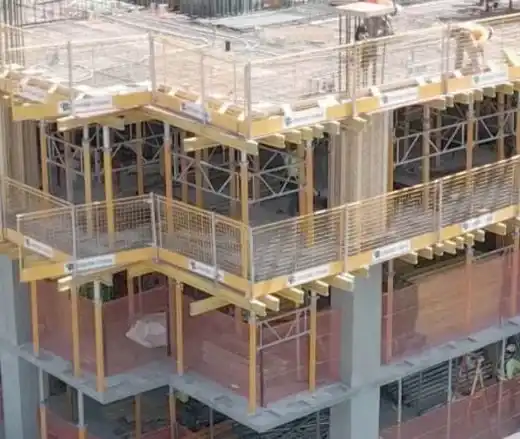
Common rules: guardrails on open-sided floors and roofs, head protection in overhead-hazard areas, trench shoring and sloping, scaffold planking width, ladder placement, and fall-protection anchorage points.

Labor Law § 200 codifies the common-law duty to provide a reasonably safe workplace. Unlike § 240 and § 241(6), a § 200 claim usually requires proof that the defendant supervised the work or had notice of the hazard.

Section 200 often applies when the case falls outside elevation hazards and Industrial Code violations — for example, unsafe floor conditions, defective machinery, or poor lighting.

Named for 22-year-old construction worker Carlos Moncayo, who died in a 2015 Manhattan trench collapse, Carlos' Law allows corporations to be held criminally liable when they negligently, recklessly, or intentionally cause the death or serious injury of an employee on the job. Penalties include fines up to $500,000. Carlos' Law raises the stakes for contractors that cut corners on worker safety.

How New York Construction Accident Settlements Are Valued

Case value is not a guess. Experienced New York construction accident lawyers build a number by stacking the right evidence against the right damages categories and anchoring each category to real documents — medical records, wage records, expert reports, and comparable verdicts. Here is how we approach valuation at Gorayeb & Associates.

Economic damages are the numbers the records prove. That means past medical expenses (billed, not just paid), future medical expenses from a life-care plan, past lost wages documented by pay stubs and tax returns, and loss of future earning capacity reduced to present value by an economist.

Construction workers often earn more than the public realizes. Union journeymen, foremen, and licensed trades routinely earn six figures in New York. A serious injury that ends a career in the trades can carry a lost-earnings loss of several million dollars — and that number has to be proven, not estimated.

Non-economic damages cover pain and suffering, loss of enjoyment of life, permanent disability, disfigurement, and — for a spouse — loss of consortium. New York law does not cap these categories in construction accident cases. Jury awards for a permanently disabled construction worker in New York City routinely run into seven figures and, for catastrophic injuries, eight figures.

Valuation comes from two sources: the medical permanency proof (MRIs, operative reports, treating-provider testimony, and day-in-the-life documentation) and comparable verdicts in the same New York county, before the same type of judge, on injuries of the same severity. A Bronx verdict on a spinal-fusion case is a stronger benchmark than a suburban case on the same facts.

Defense carriers do not use the "three times medicals" formula the public hears about. They build reserves from three things: (1) the strength of Labor Law liability, because § 240 takes comparative negligence off the table, (2) the permanency evidence, because permanent injuries carry exposure for decades, and (3) the trial record of the firm on the other side. A carrier's reserve is higher when the case is heading to a jury.

The first offer in a construction accident case is almost never the real number. Carriers open low to test the firm and the injured worker. A worker under financial pressure — medical bills, missed rent, pressure from family — is exactly the worker a carrier hopes to close cheaply. That is why we build the case to trial from day one. The firms that settle at the first offer leave money on the table; the firms that make carriers spend a million dollars on defense before mediation get paid what the case is worth.

New York Construction Accident Statistics (2023–2024)

The official data on construction safety in New York comes from the Bureau of Labor Statistics, the NYC Department of Buildings, and OSHA. These are the sources we cite in pleadings and at mediation — never vague "one recent year" numbers.

  • Total NYC fatal work injuries: 69 workers killed on the job, per the Bureau of Labor Statistics Northeast Regional Office.
  • Construction sector: 24 fatalities — the highest of any NYC industry in 2023 (BLS).
  • Falls, slips, and trips: 19 deaths across NYC in 2023 — 14 of those in construction (BLS).
  • Exposure to harmful substances and environments: 19 deaths in NYC (BLS).

Total NY State fatal work injuries: 217, down 11.8% from 246 in 2023, per the BLS New York fatality release.

  • Construction incidents: 638 in 2024, down from 841 in 2023 — a 10-year low per the NYC DOB 2024 Construction Safety Report.
  • Construction worker injuries: 482 in 2024, down from 692 in 2023 — a 9-year low (NYC DOB).
  • Construction worker fatalities: 7 deaths in 2024 (NYC DOB).
  • DOB field inspections: 416,290 in 2024 — the highest on record (NYC DOB).
  • Fall protection (29 CFR 1926.501): 6,307 citations — #1 most-cited OSHA standard nationwide, per OSHA's 2024 Top 10.
  • Scaffolding (29 CFR 1926.451): 1,843 citations in 2024 (OSHA).
  • Fall protection training: 2,171 citations in 2024 (OSHA).
5 Examples of Negligence on Construction Sites in NYC

Common Injuries in New York Construction Accidents

The severity of the injury shapes every stage of a construction accident case — treatment, time off work, permanent disability, and final case value. We regularly handle catastrophic injuries with medical records that run thousands of pages.

  • Traumatic brain injury (TBI) and concussions. From falls, struck-by events, and crush accidents. These cases often need neuropsychological testing, life-care planning, and vocational experts.
  • Spinal cord injuries and paralysis. Tetraplegia and paraplegia from falls, trench collapses, and crush injuries. These cases carry the highest lifetime care costs.
  • Back and neck injuries. Herniated discs, spinal stenosis, and fractures requiring fusion or artificial disc replacement.
  • Amputations and crush injuries. Fingers, hands, feet, and limbs lost to machinery and falling objects. Prosthetics and long-term rehab drive case value.
  • Fractures. Compound and comminuted fractures from falls and blunt trauma — often with hardware, multiple surgeries, and permanent range-of-motion loss.
  • Burns and electrocutions. Thermal, chemical, and electrical burns from fires, flash explosions, and live wires. Severe burns often need skin grafts and reconstructive surgery.
  • Shoulder and knee injuries. Rotator cuff tears, labral tears, meniscus tears, and ligament injuries — often career-ending for physical-trade workers.
  • Vision and hearing loss. From flying debris, chemical splash, welding arc, and long-term noise exposure.
  • Internal organ damage. Lacerated spleen, liver, and kidney injuries from crush events.
  • PTSD. Post-traumatic stress after a fatal site accident, assault, or near-death event. New York compensates these claims when supported by treating-provider records.

What to Do After a Construction Accident in New York

1. Get medical care right away.

Go to the ER or an authorized workers' compensation provider — even if you think you can walk it off. TBIs, internal bleeding, and spinal injuries often do not show the full picture on day one. Medical records from right after the accident are critical evidence.

2. Report the accident to your employer in writing.

New York law requires prompt written notice. Keep a copy. Make sure the incident description is accurate — not softened to protect the contractor.

3. Preserve the scene

Photograph the accident area, the equipment involved, the safety (or missing safety) devices, your injuries, and your damaged clothing, helmet, boots, or tools. Do not return or throw any of it away.

4. Collect witness information.

Names, phone numbers, and employer for anyone who saw what happened. Witness statements can make the difference between a denial and a recovery.

5. Do not give recorded statements.

Insurance adjusters and employer reps will push for statements in the first days. A few wrong words — said before you have the medical records, the incident report, and a clear timeline — can hurt the case for years. Talk to a lawyer first.

6. Call a New York construction accident lawyer.

The sooner Gorayeb & Associates opens a file, the more evidence we can preserve. The consultation is free.

For more detailed guidance, read What To Do After a Construction Accident in NYC.

Common Mistakes That Hurt New York Construction Accident Cases

The difference between a full recovery and a denial often comes down to decisions made in the first days after the accident. These are the mistakes we see most often in the cases that come to us after something went wrong elsewhere.

Abogados de accidentes de andamios en El Bronx
  • Not reporting the accident in writing. A verbal "I told my foreman" is not enough. New York Workers' Compensation Law § 18 requires written notice to the employer within 30 days. A missing written report is the single most common reason a compensation claim gets challenged.
  • Delaying medical treatment. Workers who "walk it off" for a week or two hand the defense a gap in the medical record. Insurance carriers argue that the injury happened somewhere else, or that the injury is less serious than the worker claims. Go to the ER or an authorized provider the same day, even for injuries that seem minor.
  • Giving a recorded statement before talking to a lawyer. The adjuster is not on your side. A few words about how you "felt fine" that morning, or how you "wasn't really paying attention" to where the ladder was set up, can hurt the case for years. Nothing in New York law requires you to give a statement before consulting an attorney.
  • Posting about the accident on social media. Defense firms pull Facebook, Instagram, TikTok, and public records on every plaintiff. A single photo of an injured worker at a family event, out of context, gets turned into an exhibit on "malingering." Lock privacy settings, stop posting, and tell family not to tag you.
  • Returning damaged equipment or clothing. A broken ladder, cracked harness, defective power tool, or torn hardhat is physical evidence. If it leaves the scene, spoliation becomes an issue and the defense uses it. Preserve it, photograph it, and hand it to your attorney.
  • Missing workers' compensation deadlines. Written notice within 30 days; claim filed within 2 years. Miss either and the carrier raises a statute-of-limitations defense. These deadlines are strict — extensions are rare.
  • Accepting the first settlement offer. The first offer is almost never the real number. Carriers open low on construction cases, especially when the injured worker is facing financial pressure. Once a release is signed, the case is over — there is no reopening it when the next surgery bill arrives.
  • Trying to handle the case without a construction accident specialist. Labor Law §§ 240, 241(6), and 200 are a specialty. Firms that dabble in construction cases miss Industrial Code arguments, miss liable parties, and miss the evidence that drives case value. Construction is what we do every day, not a side practice.
Abogados de accidentes de andamios en Staten Island

Common Concerns From Injured Construction Workers

Every day we speak with injured workers carrying the same worries. These are the three we hear most often — and how we answer them.

This is the first question on almost every intake call. Workers' compensation replaces about two-thirds of your average weekly wage up to a state maximum — which usually is not enough to cover rent, groceries, medical copays, and family expenses at the same time. We move early to protect your benefits, push back when the carrier underpays or cuts you off, and build the third-party case that can recover the full value of your lost wages, pain and suffering, and long-term costs. Acting early protects the income, not just the injury.

If an insurance adjuster, employer rep, or investigator is pressuring you to sign paperwork or give a recorded statement, stop and talk to a lawyer first. A few words in a recorded statement — taken before you have your medical records, the incident report, and a clear timeline — can hurt the value of your case for years. Gorayeb & Associates steps in before delay, pressure, or bad paperwork starts working against you, and handles all communications with insurers so the facts stay straight.

Nothing out of pocket. Our fee comes out of the money we recover for you, not out of your pocket. The consultation is free, 100% confidential, and there is no fee at all unless we win. In New York personal injury cases, the standard contingency fee is one-third of the net recovery. Workers' compensation fees are set by the Workers' Compensation Board and paid out of awards — never out of your weekly benefits.

Injured Without Papers? You Still Have Full Rights in New York

Under New York law, undocumented construction workers have the same legal rights as any other worker after a job-site injury. That includes the right to workers' compensation, the right to file a third-party personal injury case, and the full protection of Labor Law §§ 240, 241(6), and 200.

We understand that fear of deportation can keep injured workers away from the help they need. Our office is clear on this point: calling us does not alert ICE or any government agency. Consultations are 100% confidential. Our intake and attorney teams work in English and Spanish.

Do not let immigration concerns stop you from protecting your case. An unreported, undocumented serious injury loses value every day.

How Long Do You Have to File a New York Construction Accident Claim?

Every claim has a filing deadline under New York law. Missing the deadline usually means losing the right to recover, regardless of how strong the case would have been.

  • Personal injury lawsuit: 3 years from the date of the accident (CPLR § 214).
  • Workers' compensation: Notice to employer within 30 days (WCL § 18); claim filed within 2 years (WCL § 28).
  • Wrongful death: 2 years from the date of death (EPTL § 5-4.1).
  • Claims against a government entity: Notice of Claim within 90 days (GML § 50-e).

Evidence deteriorates, witnesses move on, and construction sites change fast. The sooner Gorayeb & Associates opens a file, the more of the case there is left to protect.

Trabajador de construcción limpiando ventanas

How Gorayeb & Associates Builds Construction Accident Cases

Every case we take gets the same methodical build. Fast investigation, careful pleading, aggressive discovery, and trial preparation from day one. Insurers know which firms settle at the first offer and which will make them spend a million dollars on defense before mediation. We are the second kind.

Our investigators visit the scene, photograph conditions, and identify witnesses. We pull every public record that touches the project — Department of Buildings permits, inspection reports, complaint history, OSHA citations, and corporate records for every party on site. For serious injury cases, we retain accident-reconstruction experts, biomechanical engineers, and site-safety specialists within the first two weeks.

We also issue preservation-of-evidence letters the same day we are retained. That locks down daily logs, toolbox-talk sign-ins, safety meeting minutes, GPS data from cranes and lifts, surveillance recordings, and the equipment itself. Spoliation sanctions are real in New York, and the threat of them is often what forces defendants to hand over records they would rather lose.

We plead every viable theory — Labor Law § 240(1), § 241(6) with specific Industrial Code citations, § 200, common-law negligence, and product liability. Specific pleading matters. Vague Industrial Code references get dismissed; a dismissed claim is one less argument at trial. For § 241(6) claims, we cite the exact Industrial Code provision — for example, 12 NYCRR § 23-1.7(b)(1) on hazardous openings, § 23-1.21 on ladders, § 23-5 on scaffolding — so the claim survives summary judgment.

Discovery is where most construction accident cases are won or lost. We depose every defendant's site-safety manager, project manager, and foreman. We obtain every daily log, safety meeting record, inspection report, and surveillance recording the defendants have in hand. We serve notices to admit, demands for Bills of Particulars, and requests for admissions on every contract, subcontract, and insurance endorsement. On the medical side, we coordinate with treating providers, control the narrative with IME defense doctors, and obtain every prior medical record the defense will try to use at trial.

Strong § 240(1) cases are often won on a motion for summary judgment on liability before trial. That shifts the case from "will there be a recovery?" to "how much?" — and every carrier reserve climbs the day that motion is granted. We move aggressively on partial summary judgment when the facts support it, and we oppose every defense motion to dismiss with specific record evidence, not boilerplate.

Serious cases need multiple experts: a site-safety expert on industry standards, a medical expert on permanency, a life-care planner on long-term costs, a vocational expert on earning capacity, and an economist on present value. We disclose experts on time under CPLR § 3101(d), prepare them thoroughly for depositions, and coordinate their reports so the case theory is consistent from liability through damages.

Most cases settle before trial. The ones that settle for the highest numbers are the ones the defense believes will actually go to a jury. We prepare every case as if it will — trial themes, jury instructions, exhibits, demonstrative evidence, and a witness order — so the defense is reading our trial plan at mediation.

Frequently Asked Question About
New York Construction Accident Lawyers

Probably yes, if another party — a property owner, general contractor, subcontractor, or equipment manufacturer — created or failed to fix the hazard that caused the injury. New York Labor Law §§ 240, 241(6), and 200 give construction workers some of the strongest protections in the country. A free case review is the fastest way to find out what claims apply.

Usually no. Workers' Compensation Law § 11 blocks most lawsuits against a direct employer. The exception is an intentional tort, which is rare. But you can sue third parties — owners, general contractors, other subcontractors, and equipment manufacturers — whose negligence caused the injury. That is how most serious New York construction cases recover full damages.

Workers' compensation benefits usually start within weeks of an approved claim. A third-party personal injury case in New York City typically takes two to four years from filing to resolution. Catastrophic-injury cases and cases that go to trial can take longer. We push each file as fast as the facts allow.

Labor Law § 240(1) — often called the Scaffold Law — imposes strict liability on property owners and general contractors for injuries caused by elevation-related hazards: falls from ladders, scaffolds, and roofs, and objects falling from height. The worker does not have to prove fault. Comparative negligence is not a defense.

Nothing up front. Gorayeb & Associates works on contingency. Our fee comes out of the money we recover for you, not out of your pocket. The standard New York PI fee is one-third of the net recovery. Workers' compensation fees are set by the Board and paid out of awards — never out of your weekly benefits.

Through workers' compensation: medical care and part of your lost wages. Through a third-party personal injury lawsuit: full past and future medical expenses, full lost wages, loss of future earning capacity, pain and suffering, permanent disability, disfigurement, loss of consortium, and — in fatal cases — wrongful death damages.

Yes. New York follows pure comparative negligence under CPLR § 1411 — your recovery is reduced by your percentage of fault, but your right to recover is not lost. In Labor Law § 240(1) cases, comparative negligence is not a defense at all. Workers' compensation is no-fault from the start.

A denial is not the end. You can request a hearing before a Workers' Compensation Law Judge. If the ruling goes the wrong way, you can appeal to the Board Panel and then the Appellate Division. Our attorneys handle appeals and regularly reverse denials.

Yes. New York workers' compensation covers every employee regardless of immigration status. Undocumented workers can also file third-party personal injury lawsuits and recover full damages, including lost wages. New York courts have repeatedly rejected attempts to use immigration status against injured workers.

In many cases, yes. Workers' compensation still applies to off-the-books employees in New York, and third-party Labor Law claims under §§ 240, 241(6), and 200 do not depend on whether the worker was on payroll. We have recovered significant settlements for undocumented, off-the-books construction workers.

40+ years of New York construction practice, more than $2 billion recovered for over 10,000 clients, a fully bilingual team, six New York metro offices, and a trial record that carriers take seriously at mediation. Construction is the core of our firm — not a side practice.

About Our Founding Attorney, Christopher J. Gorayeb

Christopher J. Gorayeb founded this firm in 1981 to represent the construction workers, tradespeople, and immigrant families who keep New York building. His paternal great-grandmother came from Nicaragua in the early twentieth century; his early experience in construction work shaped how he understood the dangers on a job site and the gap between what the law promises and what insurers deliver.

My desire in choosing to study law was always to be able to help the most vulnerable people get justice and live a better life.

Christopher J. Gorayeb

Go with Gorayeb™
Christopher J. Gorayeb

Our Ratings

Why Do Our Clients Recommend Us?

Google Reviews

New York Office Locations — Serving All Five Boroughs and Long Island

Our main office is located at 100 William Street, 19th Floor, in Lower Manhattan. We also offer in-person and virtual appointments across the New York metro area:

Free Consultation for Construction Accident Cases

Free case review. 100% confidential. Available 24/7. Our fee comes out of what we recover — not out of your pocket.

40+ years representing injured New York construction workers. More than $2 billion recovered for over 10,000 clients. Offices across all five boroughs and Long Island.

For Construction Accidents,

Go with Gorayeb™
This field is for validation purposes and should be left unchanged.

Blog

What to do after a construction accident in NYC

What To Do After a Construction Accident in NYC (2026)

If you were injured on a construction site, what to do after a construction accident in NYC is not just a search. It can affect ...
Read More
Construction accident lawyer NYC: know how they can help you

How a Construction Accident Lawyer Helps (2026)

If you get hurt on a construction site, a construction accident lawyer NYC can help you handle what happens in the first few days after ...
Read More
5 Examples of Negligence on Construction Sites in NYC

Construction Site Negligence Examples (2026)

Construction site negligence examples show how preventable safety failures can result in life-changing injuries for New York workers. In construction, falls remain the leading cause ...
Read More
Gorayeb
All consultations are 100% confidential.
Speaking with an attorney does not notify ICE or any government agency.